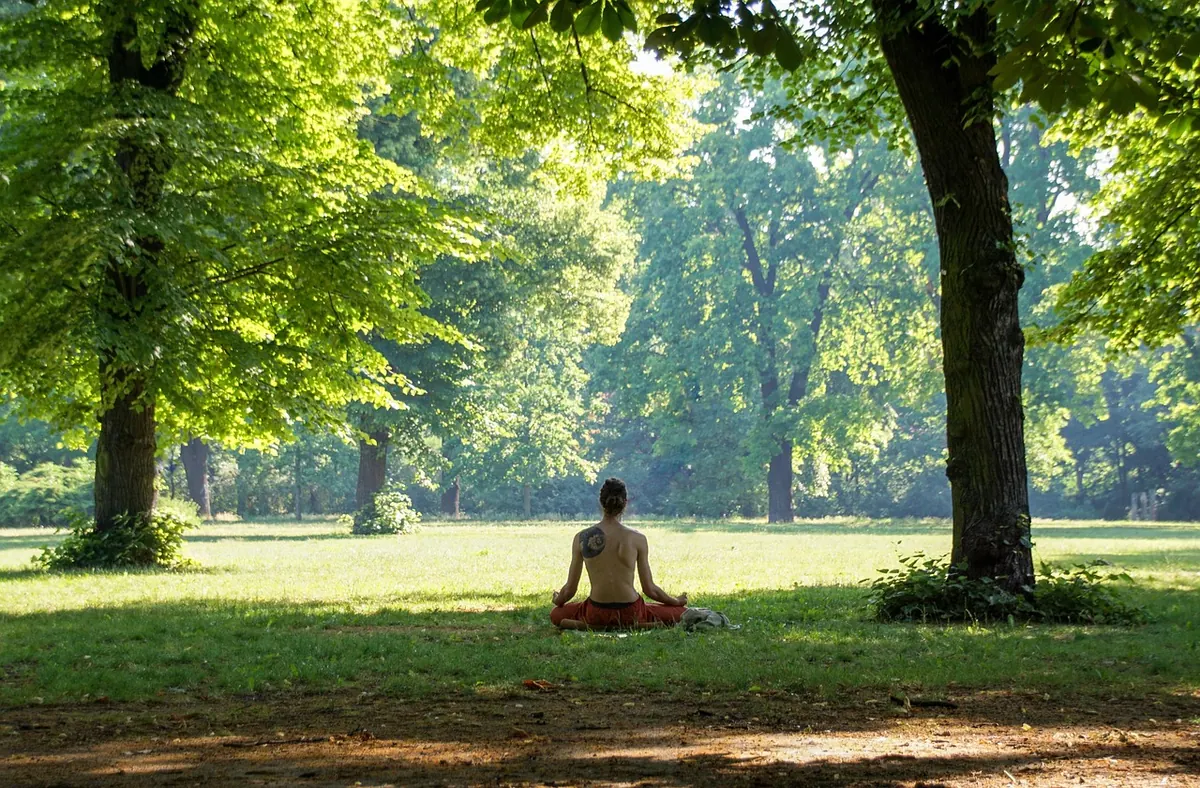
Most people who give up on meditation do not stop because they are bad at it. They stop because something uncomfortable happened — a racing mind, a wave of boredom, the creeping suspicion that everyone else finds this easy — and nobody told them it was normal. So they decided the practice was not for them and quietly moved on.
The useful truth is that almost every struggle you meet on the cushion is a common one, with a well-worn fix. Nothing below needs special equipment or an hour of your day. It needs a small adjustment and a willingness to try again tomorrow.
Mistake 1: Trying to empty your mind
If you sit down intending to have no thoughts at all, you have set yourself an impossible task. The mind produces thoughts the way the heart produces beats; that is not a malfunction. The mistake is making silence the goal, then treating every thought as evidence of failure.
Change your job description. You are not the bouncer turning thoughts away; you are the doorman who notices who walks past. Choose one physical anchor — the breath at the nostrils, the weight of your hands on your knees — and when you realise you have drifted, come back. That moment of noticing is the practice, not an interruption to it. Aim for "notice and return" rather than "blank and still".
Mistake 2: Fighting restlessness instead of working with it
Restlessness feels like an itch under the skin. Most people respond by clamping down and forcing stillness, which usually makes it worse, and then conclude they are simply too fidgety to meditate.
Try these instead:
- Shorten the session. Ten minutes daily beats half an hour twice a month.
- Look for obvious causes. A third coffee, an unresolved argument, a stiff back — deal with the source where you can.
- Move with it. Walking meditation is fully legitimate: pace slowly, feel your feet, keep the same noticing and returning.
- Give the energy a job. Count breaths from one to ten, then start again, or quietly note "restless" and stay put for one more minute.
Mistake 3: Mistaking sleepiness for calm
Ten minutes in, a pleasant fog arrives. It feels like deep peace. Often it is just tiredness, and the give-away is that you remember very little of the second half.
Sit upright rather than reclining, let your eyes stay slightly open with a soft downward gaze, and practise earlier in the day if you can — before the evening sofa swallows you. Splash cold water on your face first if you need to. And if you are genuinely exhausted, sleep. That is not a failure of discipline. Persistent tiredness despite decent sleep habits is worth mentioning to your GP rather than pushing through.
Mistake 4: Turning your practice into a performance review
The harshest commentary usually comes after the session, not during it: I'm hopeless at this. I couldn't focus for more than three seconds. That voice sounds productive. It isn't. It adds a layer of punishment to something that was already uncomfortable.
Separate observation from judgement. "That was a bad sit" becomes "the mind was busy and I noticed about twenty times". The second version is accurate, and it is exactly what the practice looks like. Drop the scoreboard of good and bad sessions too; finish instead with one plain sentence: "That is what today was like."
Mistake 5: Chasing a special experience
Many people have one lovely sit early on — calm, spacious, easy — and then spend months trying to recreate it. That is like returning to the same park hoping the fox will appear again.
States come and go. They are weather, not proof of progress. The fix is to shift how you measure success: from how it felt, to whether you turned up and stayed reasonably present. Chasing calm creates tension; practising return creates the conditions in which calm sometimes arrives uninvited.
A more useful progress check
Instead of asking whether your sits feel good, notice whether everyday life is shifting at all:
- You catch tension in your shoulders earlier in the day.
- You recover from irritation faster than you used to.
- You notice you are about to say something sharp — and sometimes you don't.
- You can sit with boredom for two minutes without reaching for your phone.
Mistake 6: Doing too much, too soon
Enthusiasm is a lovely thing and a terrible training plan. Thirty minutes twice a day for a week, then nothing for a month, is a common pattern — and it teaches your brain that meditation is a big, effortful event to be avoided.
Build a minimum viable practice instead. Five to ten minutes, at the same time each day, attached to something you already do: after your morning tea, before your shower, once you have brushed your teeth. If you miss a day, the only rule is never miss two. Do not extend the timer until the current length feels unremarkable; then add two minutes. Consistency will teach you more than intensity ever will.
Mistake 7: Sitting in a setup that works against you
There is no need for an expensive cushion or a candlelit corner. But a few details can quietly sabotage you: a phone face down on the floor beside you, a posture your back cannot hold, a spot in the busiest room in the house.
Sit on a chair with your feet flat and your spine upright, hands resting wherever they are comfortable, and put your phone in another room. Choose one spot you can return to, because repetition itself becomes a cue. If something aches, adjust. Meditation is not a posture competition.
A short reset for your next sit
If you are starting again after a bumpy patch, keep it deliberately small:
- Set a timer for eight minutes and sit somewhere you will not be interrupted.
- Pick one anchor — breath, hands or feet.
- When you drift, note it and return. Repeat as often as needed.
- Finish with one honest sentence about how it went, without grading it.
- Do the same thing tomorrow.
Meditation is a skill, not a personality trait, and it rarely looks tidy. Some sits will be restless, some sleepy, some dull. The people who get the most from it are simply the ones who keep sitting down again, however it went last time.
If practice regularly brings up distressing memories or intense anxiety, it is worth talking it through with a qualified meditation teacher or a mental health professional. Meditation can be supportive, but it is not a substitute for proper care.
Photo: wal_172619 / Pixabay